With so many tools available, it’s easy to get lost comparing features and pricing for teams that live and breathe networking. Affinity CRM stands out as more than just another database.
Unlike traditional platforms, Affinity positions itself as a relationship intelligence platform built specifically for deal-driven industries like venture capital, private equity, consulting, and investment banking. Instead of just tracking contacts, it helps teams uncover hidden opportunities by automatically capturing interactions, mapping networks, and surfacing warm introductions that might otherwise be missed.
In this Affinity CRM review, we’ll cover everything you need to know before making a decision: a deep dive into its features, a clear breakdown of the pros and cons, insights into its pricing, comparisons with leading alternatives, and our final verdict on whether it’s truly the best CRM for dealmakers.
What is Affinity CRM?

When people first hear the name, the question often comes up: “What does Affinity software do?” Affinity CRM is a relationship intelligence platform designed to help deal-driven teams like venture capital firms, private equity groups, investment banks, and consulting firms manage and grow their professional networks. Unlike a traditional CRM that only stores contact details, Affinity automatically captures data from emails, calendars, and meetings to build a dynamic, living database of relationships.
Read Also: Lofty CRM Review: Is it a Good Broker/Real Estate CRM?
How Affinity Differs from Traditional CRMs
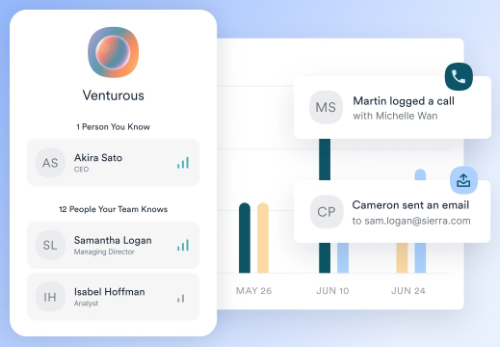
Conventional CRMs focus on sales pipelines and customer records, but they often require heavy manual input. Affinity, on the other hand, emphasizes relationship mapping and automated data capture. Instead of just tracking “who” you know, it also reveals how well you know them, who else in your network can provide an introduction, and the overall strength of those connections. This makes it particularly valuable for industries where opportunities often come through referrals and warm introductions rather than cold outreach.
Is Affinity Like Adobe?
It’s important to clear up a common misconception: “Is Affinity like Adobe?” The answer is no. Affinity CRM has no relation to the Affinity design tools by Serif (which compete with Adobe for creative software). While the design-focused Affinity products handle photo editing, vector graphics, and publishing, Affinity CRM is a business relationship management platform. If you’re looking for a tool to manage pipelines, relationships, and deal flow, Affinity CRM is the right one – not a creative suite.
Key Features of Affinity CRM

One of the biggest reasons professionals search for an Affinity CRM review is to understand what makes it different from other tools. Below are the core Affinity CRM features that set it apart:
1. Relationship Intelligence & Data Enrichment
Affinity automatically builds and updates a database of contacts and companies. Instead of relying on manual input, it enriches profiles with publicly available data—such as company details, job titles, and recent activity—helping teams see the full context behind every relationship.
2. Automatic Data Capture (Email + Calendar Sync)
Manual data entry is one of the biggest pain points in traditional CRMs. Affinity solves this with automatic syncing of emails, calendar invites, and meeting notes, ensuring every touchpoint is logged without extra effort.
3. Pipeline Management
For industries where deal flow is everything, Affinity offers customizable pipelines. Users can manage opportunities across stages, track progress, and get a clear view of where each deal stands—all in one dashboard.
4. Analytics & Reporting
Affinity goes beyond contact management by offering detailed analytics. Teams can identify which relationships drive the most opportunities, measure outreach effectiveness, and spot trends in deal activity.
5. Integrations (Google, Outlook, LinkedIn, and More)
Affinity integrates with widely used tools like Gmail, Outlook, and LinkedIn, making it easy to connect relationship data with the platforms teams already use daily.
6. Can Affinity Use AI?
Yes, this is one of the most innovative aspects of the platform. While Affinity isn’t an “AI CRM” in the marketing-heavy sense, it does leverage AI-driven relationship insights. For example, it can suggest the warmest introduction path to a new contact, surface hidden connections, and highlight which relationships may need nurturing. This intelligent use of AI ensures that dealmakers spend more time building connections and less time guessing who to reach out to next.
User Experience & Ease of Use

When evaluating any CRM, usability is just as important as features. In terms of Affinity CRM user experience, the platform offers a clean, intuitive interface that makes navigating pipelines and relationship data straightforward. Deal teams can collaborate in real time, assign tasks, share notes, and track progress without having to toggle between multiple apps.
Another highlight is the minimal learning curve compared to traditional CRMs. Since Affinity automatically captures emails, meetings, and contacts, users spend less time entering data and more time focusing on relationship-building. For teams managing large networks, this automation translates into significant time savings and improved adoption rates.
Related: Keap vs Pipedrive: Which CRM Is Right for Your Business in 2025?
Is Affinity Free or Paid?
A common question is: “Is Affinity free or paid?” Unlike some lightweight CRMs, Affinity does not offer a free forever plan. However, it typically provides free trials so teams can test the platform before committing. After the trial period, Affinity operates on a paid subscription model, with pricing based on plan type and number of users. This makes it better suited for professional firms that need depth and scalability, rather than startups looking for a basic free tool.
Affinity CRM Pros and Cons
Pros
- Automated Data Capture Saves Time – No more manual entry; emails, meetings, and contacts sync automatically.
- Unmatched Relationship Intelligence – Affinity maps connections and highlights the best introduction paths, something most CRMs can’t do.
- Ideal for Deal-Driven Industries – Built specifically for venture capital, private equity, banking, and consulting teams that rely heavily on networks.
Cons
- With no free forever plan, Affinity may feel costly for startups or small businesses.
- Some users ask: “Can Affinity open InDesign files?” The answer is no. That question refers to Affinity Publisher, a creative tool by Serif. Affinity CRM is completely separate and focused on relationship management, not graphic design.
Affinity CRM Pricing
One of the first questions teams ask is: “How much does Affinity CRM cost?” Unlike some lightweight CRMs with transparent pricing pages, Affinity uses a custom quote model based on the size of your team and the features you need. While exact numbers aren’t always publicly listed, here’s what you can generally expect:
- Premium Plan – Good for small to mid-sized deal teams. It includes relationship intelligence, data enrichment, pipeline management, and core integrations.
- Enterprise Plan – Designed for large organizations that need advanced analytics, deeper customization, API access, and dedicated support.
How Much Is Affinity Per Month?
Affinity is a subscription-based CRM, typically billed per user, per month. While official pricing may vary depending on contract terms, industry reports suggest that plans generally start in the hundreds of dollars per user/month, making it more of a premium solution than mass-market CRMs like HubSpot or Pipedrive.
Is Affinity Free or Paid?
Many potential users wonder: “Is Affinity free or paid?” The short answer is paid. Affinity does not offer a free forever plan, but it does provide a free trial so teams can test the platform before committing. This makes it clear that Affinity is positioned for professional dealmakers and firms willing to invest in powerful relationship management, rather than startups looking for a free tool.
Affinity CRM Alternatives & Competitors
While Affinity is powerful, it’s not the only option on the market. Depending on your industry, team size, and budget, you might want to compare it against other leading CRMs. Below are the top Affinity CRM alternatives worth considering:
Affinity vs Salesforce
Salesforce is the global leader in CRM, known for its customization and scalability. While Salesforce is flexible across industries, it often requires heavy setup and ongoing admin work. Affinity CRM, on the other hand, focuses narrowly on relationship intelligence for deal-driven teams. If you need a powerful, industry-agnostic CRM, Salesforce is right for you, but if your success depends on networks and introductions, Affinity is a better choice.
Affinity vs HubSpot
HubSpot is a great option for small to medium-sized businesses that want a free entry plan and strong marketing automation. However, HubSpot lacks Affinity’s deep relationship-mapping features. For marketing-heavy teams, HubSpot wins; for investors and dealmakers, Affinity CRM is more relevant.
Affinity vs Pipedrive
Pipedrive is lightweight, affordable, and built with sales teams in mind. It’s easy to use but lacks advanced intelligence. Affinity is more expensive, but it provides the data enrichment and AI-driven insights that professional service firms rely on. If you’re a startup with a tight budget, Pipedrive is a good choice; if you need a network-focused tool, Affinity is stronger.
Which Is Better, Affinity or Canva?
Some people ask: “Which is better, Affinity or Canva?” The two are unrelated tools. Canva is a design platform for creating graphics and presentations, while Affinity CRM is a business relationship management platform. If you’re comparing them, you’re mixing design software with CRM software.
Is Canva Part of Affinity?
No, Canva is not part of Affinity. Canva is an independent design company, while Affinity CRM is developed by Affinity.co, and the Affinity Creative Suite (Designer, Photo, Publisher) is produced by Serif. They serve completely different markets.
Who Uses Affinity CRM?
So, what companies use Affinity? It’s widely used by investment firms, consultancies, dealmakers, and professional services organizations that depend on high-value networks. Top venture capital firms, growth equity funds, and M&A advisors leverage Affinity to track opportunities and uncover warm introductions.
Its strongest adoption comes from:
- Venture Capital Firms – Tracking deal flow, sourcing startups, and leveraging networks for warm introductions.
- Private Equity Groups – Managing portfolios, fundraising, and maintaining LP and advisor relationships.
- Investment Banks – Building and maintaining client pipelines, partnerships, and deal activity.
- Law Firms & Consulting Firms – Strengthening client relationships and winning new business through network insights.
Who Owns Affinity Software?
There’s often confusion about ownership. Who owns Affinity software? Affinity CRM is developed by Affinity.co, a U.S.-based company focused on relationship intelligence for professionals. This is different from the Affinity design suite (Affinity Photo, Affinity Designer, Affinity Publisher), which is owned by Serif, a creative software company. While they share a name, they serve completely different markets.
How Many Computers Can Use Affinity?
A common question is: “How many computers can use Affinity?” Since Affinity CRM is SaaS, users can log in from multiple devices—desktop, laptop, or mobile. However, licenses are assigned per user, not per device. This means one licensed user can access their account from as many devices as needed, but each team member requires their own license.
My Final Say: Is Affinity CRM Worth It?
So, is Affinity CRM worth it? For deal-driven industries like venture capital, private equity, investment banking, and consulting, the answer is a strong yes. Affinity delivers a unique mix of relationship intelligence, automated data capture, and AI-powered insights that traditional CRMs simply don’t match.
Is Affinity a Good Software? Yes, if your business thrives on networks and referrals, Affinity CRM is a good software choice. It may not be the cheapest option, but its specialized features make it the best CRM for dealmakers who need more than just contact storage.
